
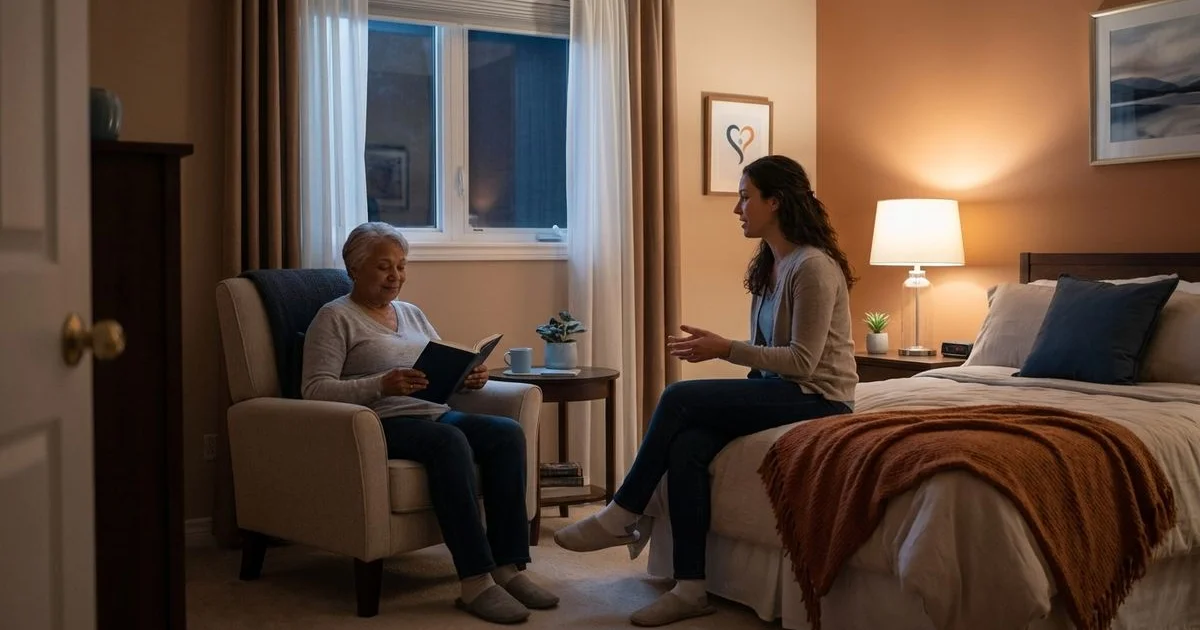
Our team often sees how challenging it is to balance safety with privacy when caring for aging parents. Monitoring systems sometimes feel intrusive, making families hesitant to install them. We find that bathroom and bed exit sensors for elderly adults offer a respectful middle ground.
This specific technology protects dignity while preventing emergencies.
Our guide will walk you through the hardware, the alert process, and the configuration options. Let’s look at the facts and practical applications.
Sensors, Not Cameras, in Private Rooms
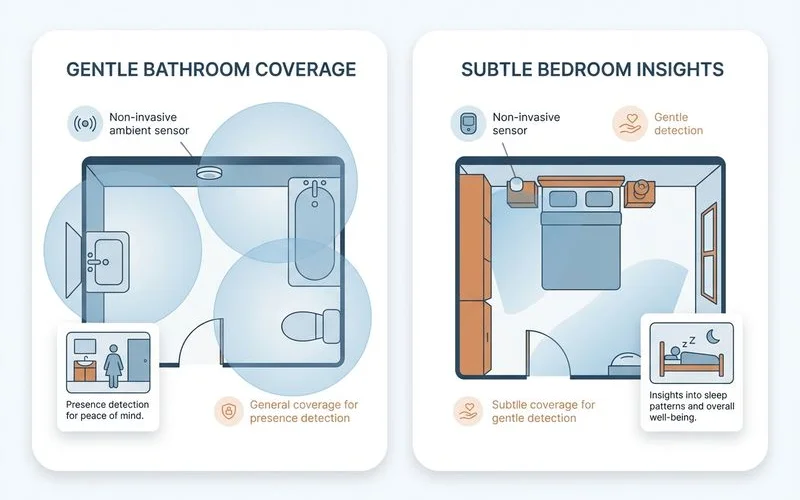
The bathroom and bedroom are covered with sensors only. These include a bathroom presence sensor elderly individuals can use safely, alongside a bed-leaving sensor in the bedroom. Our team draws a hard design line by placing no cameras in private spaces, ever.
That choice is a foundational privacy guarantee, not a marketing preference. We discuss the wider service this layer sits in over on the bathroom & bedroom safety main page. Statistics confirm why these high-risk zones need specialized coverage.
Identifying High-Risk Zones
Our data review highlights a stark reality. The Public Health Agency of Canada reported a 51 percent increase in fall-related deaths among adults 65 and older between 2017 and 2022. We deploy presence sensors to notice when someone is in the bathroom and roughly for how long.
These devices do not capture identifying patterns. Our hardware choices prioritize both accuracy and dignity. The bed-leaving sensor sits unobtrusively in the bedroom and notices when the bed is empty, especially at unusual hours.
We often use two main types of sensors to track presence. This quick comparison shows the technical differences between them.
| Sensor Technology | How It Works | Best Use Case |
|---|---|---|
| Passive Infrared (PIR) | Detects large body heat signatures and major movements. | General room entryways. |
| Millimeter-Wave (mmWave) | Uses radar to detect micro-movements, including breathing. | Stillness in bathrooms or beds. |
| Pressure Pads | Triggers an alert when physical weight is removed. | Under-mattress bed exits. |
Our team prefers millimeter-wave radar for bathrooms because a still person will not trigger a false absence.
What the Family Receives, Calmly
Push notifications alert the family only when a signal is genuinely worth surfacing. Our system spots anomalies, such as a longer-than-usual bathroom presence or the bed being left at 3 am instead of the usual 7 am. A delayed notification prevents unnecessary panic.
We tune these alerts to avoid waking you up for a quick, normal restroom trip. That quiet operation is exactly the design goal for most weeks. Our priority is giving you actionable context without alarm fatigue.
You can call your parent calmly, dismiss the notification if you see it was nothing, or escalate the issue to a sibling. We let the app give you the choice, rather than making the decision for you. Fall prevention carries massive financial and physical weight.
Financial and Physical Impacts
Our research indicates that direct health care expenses for older adult falls in British Columbia alone reached 1.2 billion dollars in 2025. Early interventions directly reduce the severity of these events. We provide more context on why these moments matter in our guide on night-time and bathroom risks for older adults.
Proper bed leaving alert senior setups keep those hospital costs and injuries at bay.
Managing Notifications Effectively
Our platform organizes alerts into clear categories. Here is how families typically handle the incoming data.
- Immediate Review: Check the timestamp of the bathroom and bed exit sensors for elderly.
- Contextual Assessment: See if the event aligns with known routines or recent medication changes.
- Calm Outreach: Make a low-pressure phone call to check in.
- Family Escalation: Forward the notification to a nearby sibling if you cannot reach the parent.
Our goal is to empower your response process. Consistent tracking builds a safer environment over time.
Opt-In and Configurable
Coverage in private rooms is entirely opt-in. Our concierge setup process walks through exactly which rooms you want covered and how. Many families enable bed-leaving alerts for the overnight hours and skip bathroom presence entirely.
We see other clients request both because the bathroom is where their primary worry lives. Customization makes the technology fit the specific living situation. Our team frequently installs temporary setups for post-hospital recovery windows.
Customizing for Recovery Windows
Fall-related hospital stays for adults over 65 typically last nine days longer than average admissions in Canada. We recommend turning maximum coverage on during this fragile return-home period, and then turning it off once recovery is steady. The main point is that you choose the parameters, your parent agrees to them, and the system can be adjusted later.
Our configurations adapt to changing health needs. Consider these common coverage combinations.
- High-Risk Nighttime: Bed sensors active from 10 pm to 6 am, combined with full bathroom tracking.
- Recovery Mode: 24/7 monitoring in all private spaces immediately following a hospital discharge.
- Minimalist Setup: Only extreme anomalies trigger an alert, such as a bathroom presence lasting over an hour.
We design private-room coverage to feel like safety the homeowner controls, not surveillance. Deliberate sensor placement, precision alert tuning, and a clear opt-out process keep the experience dignified.
Conclusion
Choosing the right monitoring tools brings peace of mind to both you and your loved ones. Our team is ready to help you implement reliable bathroom and bed exit sensors for elderly relatives. Start by evaluating your specific high-risk zones today.
We encourage you to reach out for a custom configuration assessment.