
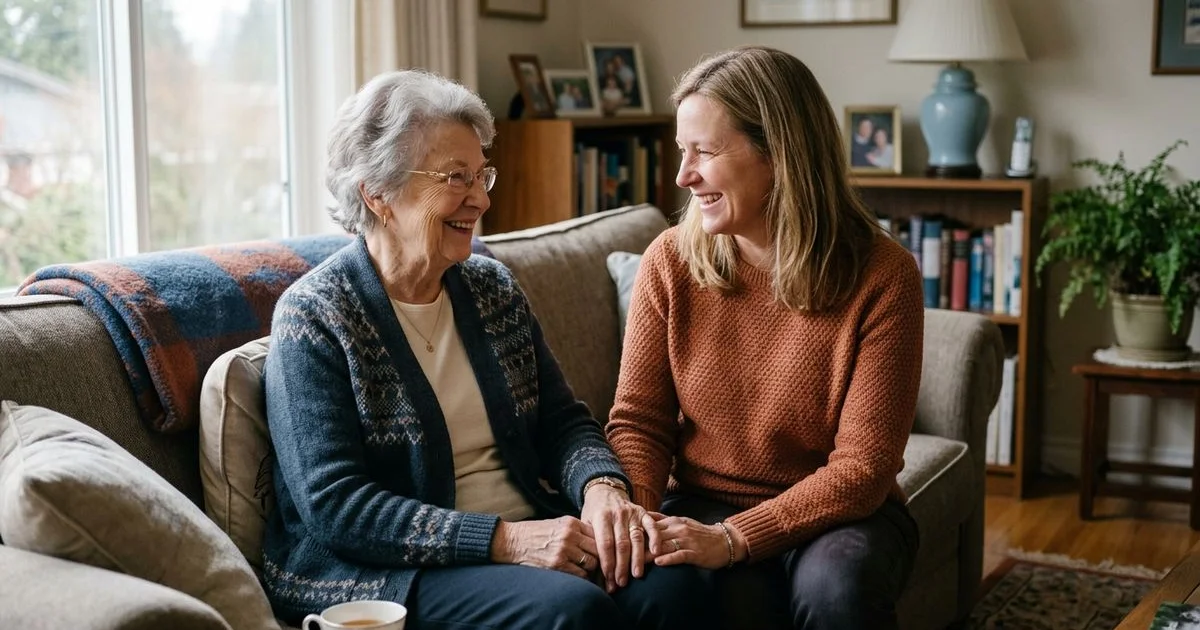
The Conversation Is the Real Obstacle: How to Talk to Elderly Parent About Monitoring
We regularly advise families on exactly how to talk to elderly parent about monitoring without causing friction. Finding the right technology is the easy part, but the actual hurdle is introducing the idea to an aging parent without causing offense.
Most parents interpret the word “monitoring” as a sudden loss of trust. They hear a message that you think they are no longer capable of living alone.
Our experts rely on three specific steps for a successful chat:
- Leading the discussion with themes of control and autonomy.
- Framing the worry as your own issue instead of their failing health.
- Providing hands-on control over the hardware privacy settings.
Our team often references 2024 data from Statistics Canada showing that over 85 percent of older adults fiercely prefer to age in place. Any conversation that threatens that independence will hit an immediate wall.
The system simply acts as a silent safety net that stays quiet until something is actually wrong.
If you want to understand the exact privacy design to reference during your call, monitoring without watching is the best resource to share. We consider it mandatory reading before making your pitch.
A Simple Script, in Your Own Words
We highly recommend using a structured conversation framework to introduce monitoring to a parent. Adjust the language below so the words feel natural to your own communication style.
“Mum, I have been worrying more than I should about the long drive between visits. This is not because I think anything is wrong, but because I would love for both of us to relax a bit more between calls. There is a system I am looking at that does not watch you. There is no camera you have to look at, no button to wear, and nothing for you to do. It only speaks up if something is actually wrong. Would you be open to me telling you a bit more about how it works?”
Our preferred script accomplishes a few critical things on purpose. A 2026 industry report from Lifeline Canada highlights that many seniors reject standard medical alert devices because they view wearable pendants as a symbol of lost independence.
We address these exact concerns by structuring the conversation around specific psychological triggers. Here is a breakdown of why this specific wording is so effective:
| Script Strategy | Why It Works |
|---|---|
| Owning the worry | It frames the system as a personal favour to you, removing any implication that she is frail or failing. |
| Promising no buttons | It bypasses the stigma of traditional medical alert lanyards and bulky plastic wearables. |
| Asking permission | It puts your parent in the driver’s seat of the conversation, maintaining their authority. |
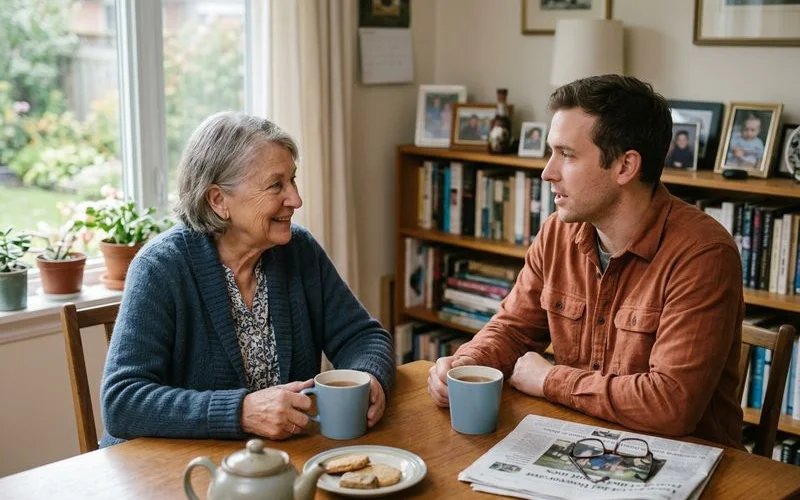
Our 7-day free trial offers a gentle, risk-free path forward if your parent is interested but still wary. The trial period starts at device activation rather than checkout, giving her a chance to see how the system fits into her daily routine before any bill is on the table.
Keep Dignity and Agency at the Centre
We firmly believe that a successful elderly parent safety conversation must prioritize their self-respect. Leading with fear-based arguments will almost always backfire and create resentment.
The Public Health Agency of Canada notes that a fear of falling can actually cause seniors to reduce their daily activity, so highlighting risks can spark unnecessary anxiety.
Our communication guidelines explicitly advise against bringing up alarming medical statistics during your chat. Specific phrases should be entirely avoided:
- “Before something happens…”
- “In case you develop memory issues…”
- “Since you are living alone now…”
Those framings feel like an unfair label to an independent adult, regardless of your good intentions.
We suggest focusing the dialogue on positive, empowering outcomes instead. You can emphasize themes like maintaining her independence, staying in her own home longer, and enjoying fewer hovering check-ins from relatives.
Providing Tangible Control Over the System
Our team ensures your parent has real, hands-on control over how the technology operates in their living space. The Kinpanion app explicitly shows her exactly what the family will see, which is just a logged event rather than a live video feed.
We created a concierge setup process that involves walking her through every single feature to guarantee she is completely comfortable. If she wants the bathroom presence sensor turned off or a device moved out of a particular room, the request is honoured immediately.
The Ultimate Goal of the Conversation
Our privacy protocols treat her personal preferences as a simple app setting, never an ongoing family debate. The best version of this conversation concludes with your parent feeling like she just solved a problem for you.
We position the monitoring hardware merely as the quiet background technology that makes your peace of mind possible. Once the system is running, features like fall detection simply become invisible safety nets that nobody has to think about every day.
Our team hopes this guide simplifies how to talk to elderly parent about monitoring so you can both enjoy greater peace of mind. Review the Kinpanion app features today to see exactly how our privacy-first settings protect your family’s independence.