
We know the anxiety that sets in the moment a loved one leaves the hospital.
That transition back to regular life is a delicate balancing act for Canadian families. Finding ways to prevent hospital readmission elderly at home is a major concern.
According to recent data, roughly 20% of older adults face hospital readmission within the first 30 days after discharge. The numbers tell us that returning to familiar surroundings does not automatically guarantee a safe recovery.
We are going to break down why this specific window is so critical. Then, we will explore practical ways to use whole-home monitoring to catch subtle shifts before they turn into emergencies. If the discharge hasn’t happened yet, our guide on setting up monitoring before a hospital discharge covers the steps to get ahead of it.
Why the First 90 Days Are the High-Risk Window to Prevent Hospital Readmission Elderly at Home
The early weeks after a hospital discharge represent the absolute highest-risk window for older adults because medications are shifting and mobility is compromised. Unpredictable energy levels and intermittent provincial home care visits create gaps where falls and infections rapidly develop. Recovery simply does not follow a straight line.
We often see that relying solely on sporadic check-ins leaves families vulnerable to sudden emergencies. The Public Health Agency of Canada reports that fall-related hospitalizations among seniors recently rose by 47%. The most common culprits driving these readmissions include:
- Severe falls in the bathroom or bedroom.
- Undetected urinary tract or respiratory infections.
- Missed or incorrectly taken medications.
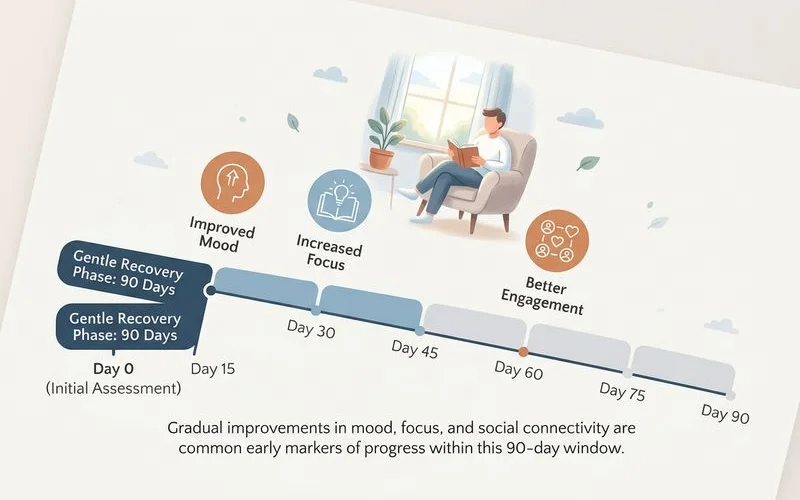
During the critical recovery window 90 days senior patients face their highest vulnerability, making targeted observation essential. Our team believes that having a calmer family picture of how recovery is actually going provides immense relief. It is not a clinical assessment, but rather a slightly better view than a daily phone call provides.
For the wider service, hospital-to-home monitoring is the main page.
What Whole-Home Cover Watches During Recovery
When evaluating post discharge monitoring elderly care options, the system specifically tracks fall detection, bathroom frequency, and general inactivity. These three metrics provide immediate visibility into the most critical risk factors, such as nighttime accidents or developing infections. Fall detection covers the highest-acuity events.
A fall during the first month home remains one of the most common reasons for a return trip to the emergency room. Sensor-based bathroom and bed-leaving coverage flag the nighttime and private-moment risks where families worry the most. Inactivity signals can surface subtle shifts that might warrant a call to a local Home and Community Care provider.
We find that a quieter morning than usual or an unusual gap in movement often tells an important story. Activity trends build a vital picture over weeks. Sleep length, bathroom frequency, and breathing rhythm establish a baseline from the sleep pad layer.
Our experience shows that small shifts in this baseline hint at a developing infection or a harsh medication side-effect. An extra three trips to the bathroom at night is a classic early warning sign of a urinary tract infection. None of these alerts is a formal diagnosis, and they are simply hints worth sharing with a doctor or the home-care team.
To understand this better, consider the difference in response capabilities:
| Recovery Approach | Visibility Level | Typical Response Time |
|---|---|---|
| Traditional Daily Phone Calls | Low (relies on self-reporting) | Often delayed until symptoms are severe |
| Whole-Home Sensor Coverage | High (objective data tracking) | Proactive intervention before emergencies |
You can explore how these small signs matter by reading what daily activity trends reveal.
How Families Use Early Signals in Practice
Families use these daily activity signals to contact medical professionals before a minor issue becomes an emergency. Instead of waiting for a crisis, caregivers can present doctors with concrete data, like increased bathroom visits, to catch problems early. The pattern seen most often involves a calm, daily routine.
A family checks the app each morning during the first few weeks home. They notice when something looks different, and they call a professional.
We know that home care nurses or doctors act much faster on a specific observation than a vague complaint. Saying a loved one seems off is incredibly hard to diagnose. Saying the patient has been awake since 2 AM and visited the bathroom four times gives medical professionals actionable data.
Here are the most common early signals families catch with remote monitoring:
- Unusual nighttime restlessness or pacing.
- Extended periods of daytime inactivity.
- Significant changes in bathroom frequency.
- Skipping meals or altering kitchen routines.
The system does not make medical decisions for you. It provides a calmer base for the conversations you are already having with your care network.
Our official stance avoids claiming that this technology prevents readmission. The system itself cannot prevent anything, but it delivers better visibility sooner. That visibility absolutely helps, though the outcome always depends on the specific situation.
Honest About the Limits
This monitoring technology supports the recovery process by offering visibility, but it is absolutely not clinical care. It does not dispense medications or measure vital signs, serving only as an extra layer of information for your care network. This technology never replaces in-person home health visits, follow-up appointments, or consultations with a doctor.
We want to be entirely clear about its capabilities during the transition home. The equipment will not measure clinical vitals like blood pressure, and it will not guarantee a complication-free recovery. The right way to view this technology is as one calm layer working alongside the people doing the heavy lifting.
What the System Cannot Replace
To set accurate expectations, keep in mind that sensors cannot take the place of:
- Provincial home care nurses administering actual treatments.
- Prescribed physical therapy and mobility exercises.
- Direct emergency medical response services like 911.
- Accurate medication dosing and pill management.
Our goal is simply to keep the family slightly better informed. When something shifts, you are equipped to act slightly faster. For most families managing a recovery from a hip surgery or a major fall, that calm visibility holds tremendous value during the first 90 days.
After that critical window, many families choose to keep the system active as ongoing whole-home cover. The temporary recovery setup naturally transitions into a regular safety net.
We understand that finding the right setup takes time. Focused observation helps families track steady progress to successfully prevent hospital readmission elderly at home. Start your 7-day free trial today to see how this visibility can support your specific needs.