

We see a common challenge when families try to protect an aging parent at home.
The initial relief of buying a safety device often fades when the parent refuses to use it. A 2026 report from the Public Health Agency of Canada notes that falls remain a leading cause of hospitalizations for older adults.
Our team notices this pattern across many households in Canada. The core comparison of a non-wearable fall alert vs wearable monitor depends entirely on daily habits. Let’s look at the data behind device abandonment, compare the practical costs, and outline clear ways to respond effectively.
The Wearable-Rejection Problem Is Common
We frequently meet families who come to monitoring because a wearable pendant has not worked out. The device ends up on the charger, or the watch comes off in the shower. These discarded devices represent a massive gap in home safety.
Our experience shows these are incredibly everyday outcomes. A 2019 ResearchGate study tracked wearable users and found that half of the participants abandoned their devices in less than three weeks. The wearable model assumes the parent will reliably wear and use the equipment.
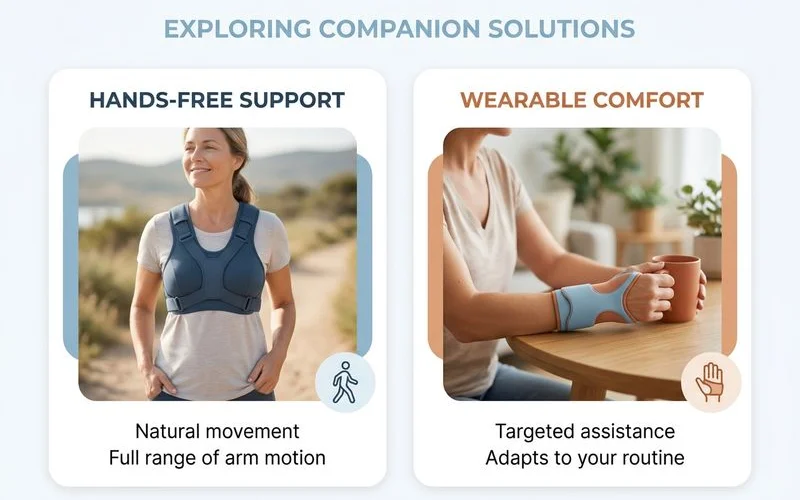
We know that when that assumption breaks, the safety value disappears completely. Hands-free whole-home detection sits in a different shape entirely. This system pays attention from the home itself using environmental sensors and an on-device camera.
Our preferred approach asks absolutely nothing of your parent. There is nothing to wear, nothing to remember, and nothing to feel self-conscious about. Caregivers often share a few actionable tips on avoiding device rejection.
We suggest reviewing these common friction points before making a purchase:
- First, check the charging routine. Devices requiring daily charging see the highest drop-off rates.
- Our clients also report that physical comfort is a huge factor. If a wristband pinches, it will quickly end up in a drawer.
- You should also understand the stigma. We find that many seniors reject the visible medical look of traditional pendants. The visual reminder of aging is often too much to ignore.
For the broader three-way comparison including consumer cameras, camera vs pendant vs in-home monitoring covers that in detail.
Where Wearables Still Fit
Our team wants to be completely fair to the wearable category. Some active parents really do wear them consistently and like the simplicity. They only worry about acute incidents during the day.
We agree that a wristband fall detector can work fine for those situations. A pendant they actually keep on provides real value. The wearable also has cost simplicity.
Our research into Canadian options for 2026 shows clear pricing tiers. A one-time hardware buy plus a monitoring fee avoids a whole-home install. The table below highlights standard monthly fees from providers like Telus Health or Philips Lifeline.
| System Type | Estimated Monthly Cost (CAD) | Best Use Case |
|---|---|---|
| Basic Medical Alert Pendant | $30 - $35 | Highly compliant, budget-conscious users |
| Pendant with Fall Detection | $40 - $45 | Users with high fall risk who wear devices |
| Mobile GPS Wearable | $50 - $55 | Active seniors who leave the house often |
We present these figures to represent basic home coverage without extra premium features. If the parent is reliably wearing the device, you have a solid solution. You do not need to overcomplicate things if the basic tool works.
Our analysts happily acknowledge that a tight budget makes this a legitimate fit. An IPX7 minimum rating ensures the device survives a shower. Caregivers should always verify this water resistance level.
We always point families to detailed comparisons for specific models. For the head-to-head on the pendant specifically, fall detection camera vs medical-alert pendant goes deeper. This guide covers the exact technical differences.
Where Hands-Free Wins
Our experts see a few specific situations where hands-free clearly fits better. A parent who has already rejected wearables once is a prime candidate. A parent with mild cognitive decline who forgets to wear it also needs a different approach.
We point to the bathroom as a critical risk zone. The Public Health Agency of Canada reports that over 14% of home falls happen in the bathroom. This is exactly where seniors often remove their watches before bathing.
Our systems solve the unconscious-fall scenario immediately. Pressing a physical button is completely impossible during a medical emergency like a stroke. Healthcare professionals share a critical warning about this exact situation.
We must prioritize environmental monitoring when physical compliance drops, because the risk of an unmonitored fall in the home remains dangerously high.
The system operates effectively without asking the parent to do anything differently. A parent who feels the stigma of visible devices will naturally refuse a pendant.
Our hands-free Kinpanion model gives the family real coverage in all these cases. The preferred whole-home shape widens coverage across multiple distinct areas:
- The bathroom remains fully monitored during high-risk bathing routines.
- We include the bedroom to protect against nighttime disorientation. The hallway and kitchen are always in the picture.
Caregivers finally get true peace of mind.
Our final advice on the non-wearable fall alert vs wearable debate is to test the technology yourself. For the wider Kinpanion design, privacy-first fall detection is the main page. The 7-day free trial is the gentle path to testing the fit before committing to a year.